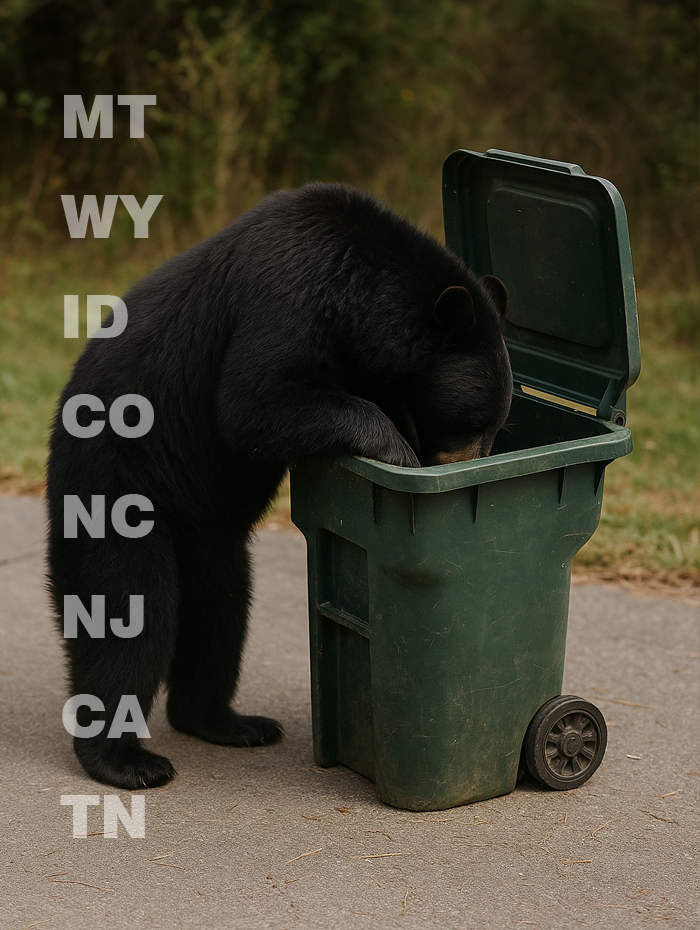
Yes, bear-proof garbage can regulations vary significantly by location, and adherence to these local rules is mandatory in many areas prone to human-bear conflicts. Regulations are typically established at the county, city, or park level, rather than universally statewide or nationwide.
How Regulations Vary Mandatory vs. Recommended: Some areas legally require the use of certified bear-resistant containers, while others only strongly recommend them.
Geographic Specificity: Regulations often apply only to designated “Bear Conflict Zones” or specific wilderness areas. For example, in the Adirondack Park, canisters are required in the Eastern High Peaks Wilderness Area, but only recommended elsewhere in bear country.
Specific Requirements: Some jurisdictions mandate the use of containers certified by specific bodies, such as the Interagency Grizzly Bear Committee (IGBC). Others might allow for the use of bear-resistant enclosures as an alternative to the containers themselves.
Storage Rules: Beyond the container type, rules may also dictate how and when trash is stored. Common requirements include keeping containers locked when not being used, storing them in a secure garage or shed, and placing them at the curb only on the morning of pickup, not the night before.
Penalties for Non-Compliance: Violating food storage and garbage ordinances can result in significant consequences, including fines, confiscation of food/trash, park expulsion, or even jail time, depending on the location and severity of the violation.
Key Takeaway
Before traveling to or residing in bear country, it is crucial to check the specific regulations for that area. You can find information from local authorities, such as:
National or State Park websites: For rules within park boundaries, check the National Park Service or local state park guidelines. City or County Government websites: For local ordinances, review government websites (e.g., the Eagle County Government site provides specific information for its district).
Waste Management Services: Local waste haulers often provide information and may offer certified bear-resistant containers as a service.
Following these regulations helps protect human safety and, more importantly, keeps bears wild and prevents them from being euthanized due to habituation to human food sources.
- Adirondack Park
- Interagency Grizzly Bear Committee
- National Park Service
- Eagle County Government
- Waste Management
Different locations have different factors to be considered regarding bearproof trash can regulations
Bear-proof garbage can regulations do vary significantly by location. Different cities, counties, and states have their own specific rules regarding when, where, and how bear-resistant containers must be used. Here are some key ways these regulations differ:
1. Geographic Scope
- El Dorado County, CA: Requires bear-resistant enclosures in certain unincorporated areas, especially near schools and in bear-prone zones. The enclosures must be front-loading, hold 32-gallon cans, and weigh no more than 50 pounds when loaded.
- Teton County, WY: Requires bear-resistant containers for all residents and businesses countywide, effective July 1, 2022.
- Jackson, WY: Only requires bear-resistant containers in the designated ‘Bear Conflict Zone,’ not throughout the entire town.
- Missoula, MT: Phased implementation of bear-resistant containers, with different deadlines for different zones (e.g., Grant Creek, Rattlesnake, University of Montana, etc.).
2. Type of Container Required
- Some areas require IGBC-certified bear-resistant containers.
- Others may allow enclosures or buildings that are bear-resistant, as long as the trash is stored inside.
- Some specify size and weight limits (e.g., 32-gallon cans, no more than 50 pounds loaded).
3. Who Must Comply
- Residential vs. Commercial: Some regulations apply only to homes, while others include businesses.
- New Construction: Some areas require bear-resistant enclosures for new residential units.
- Existing Properties: Others may require compliance only if a property has been identified as a bear access problem.
4. Enforcement and Deadlines
- Some areas have phased rollouts with different deadlines for different neighborhoods.
- Others have a single effective date for all residents and businesses.
5. Additional Requirements
- Some areas prohibit feeding wildlife or planting fruit trees.
- Others require gardens and crops to be managed in a way that doesn’t attract bears.
6. Local Variations
- Bozeman, MT: Offers bear-resistant bins for neighborhoods with frequent bear activity, but does not require them for all residents.
- New Jersey: Encourages the use of certified bear-resistant containers in areas frequented by black bears, but does not mandate them everywhere.
Summary
Bear-proof garbage can regulations are not uniform across regions. They depend on local bear activity, community needs, and municipal policies. If you live in or are moving to a bear-prone area, it’s important to check with your local government or waste management provider to understand the specific requirements for your location.
- El Dorado County
- Teton County
- Jackson
- Missoula
- University Of Montana
- Bozeman
- New Jersey