
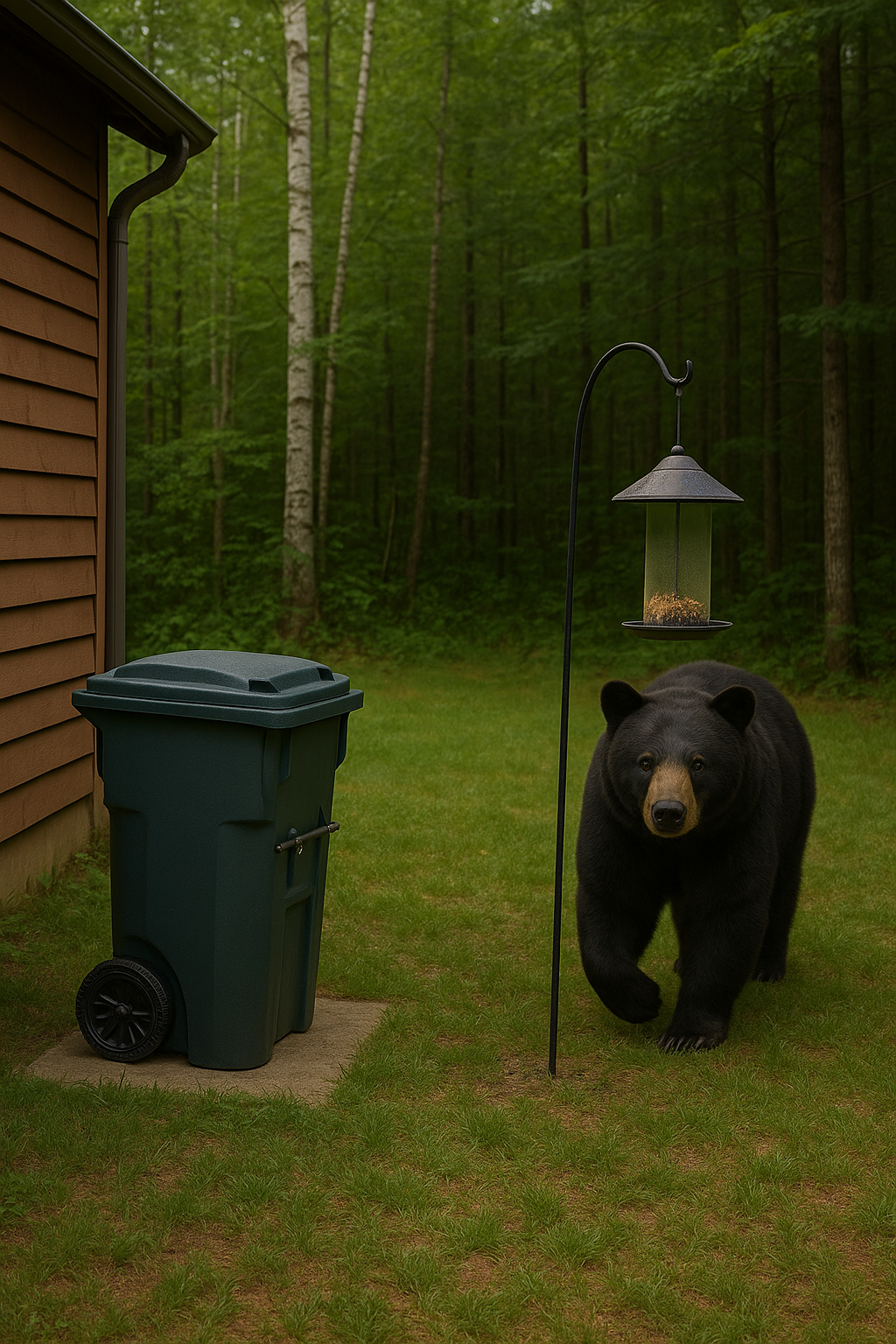
Practical bear safety tips to keep your family and property safe.
Keeping black bears out of your yard primarily involves removing all potential food sources and using deterrents to make the area unappealing to them. Consistency is key to preventing bears from becoming habituated to human areas.
Remove Attractants
The most effective method is prevention by eliminating access to food:
Secure Garbage: This is the most common attractant. Store all trash in a secure building like a garage or shed, or use bear-resistant containers. Only put garbage out on the morning of collection day, not the night before. Periodically clean cans with an ammonia or bleach solution to reduce odors.
Bird Feeders: Take down bird feeders when bears are active (typically spring through fall, or year-round in some regions). Birdseed and suet are high in calories and very attractive to bears.
Pet Food: Feed pets indoors. If you must feed outdoors, remove all uneaten food and clean the bowls immediately after they finish eating. Store pet food securely inside.
Grills and BBQs: Clean outdoor grills and smokers thoroughly after each use, including grease traps and grates. Store clean grills in a secure area, such as a garage or shed.
Compost Piles: Do not put meat, dairy, or sweet foods in your compost pile. Use an enclosed or bear-resistant composter, or consider protecting it with electric fencing.
Fruit and Gardens: Harvest fruits and vegetables as they ripen. Promptly pick up any fallen fruit from the ground.
Livestock: Secure chicken coops, beehives, and other small livestock enclosures with properly installed electric fencing.
Related articles – Why bears are attracted to trash and how to stop it
Active Deterrents
If a bear enters your yard, you should try to scare it away to teach it that human presence is a negative experience (aversion conditioning):
Make Loud Noises: Yell, clap your hands, bang pots and pans, or use an air horn from a safe distance.
Appear Large: Stand your ground, face the bear, and make yourself look as big as possible by spreading your arms or a jacket.
Use Lights: Install motion-activated lights around your property to startle visiting bears at night.
Use Bear Spray: Carry bear spray for self-defense if you are outdoors in bear country, but only use it in close, threatening encounters, not as a general repellent in your yard.
Additional Precautions
Secure Doors and Windows: Close and lock all bear-accessible windows and doors (including garage and vehicle doors) when you leave the house and at night. Bears can open lever-style handles, so consider replacing them with round doorknobs.
Don’t Leave Scented Items Outdoors: Items like scented candles, toiletries, or even clothing with food odors can attract bears.
Alert Neighbors: Inform your neighbors about bear activity so they can take similar precautions. A community-wide effort is most effective for preventing problems.
Contact Authorities: If a bear is persistent or aggressive, contact your local wildlife agency or police department.
Related articles: Bear-resistant container mandates help reduce bear-human encounters